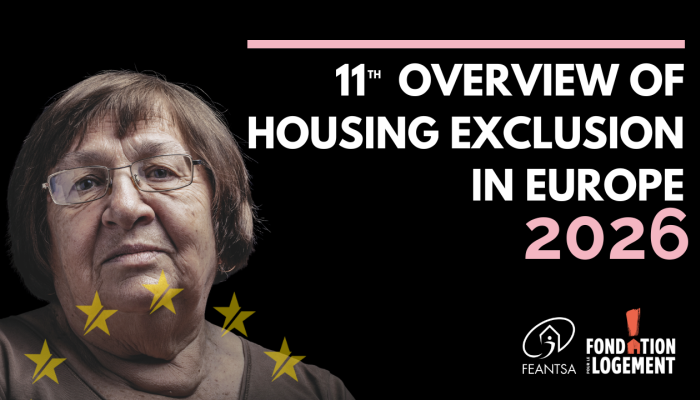
FEANTSA and Fondation Pour le Logement have published the new Overview of Housing Exclusion in Europe. This edition comes at a time of growing political recognition of homelessness at EU level, with new commitments under the European Affordable Housing Plan, the European Strategy to Combat Poverty and the proposed Council Recommendation on housing exclusion. Yet, despite this increased attention, homelessness continues to rise across Europe, with an estimated 1.4 million people sleeping rough, staying in emergency accommodation or using dedicated homelessness services. Overstretched services, growing waiting lists, prolonged stays in temporary accommodation and increasingly restrictive access criteria point to a worsening situation.
This year's report focuses on the often-overlooked housing exclusion experienced by older people. At least 170,000 older people are currently experiencing homelessness across Europe, although the actual figure is likely to be considerably higher. Many more face insecure or inadequate housing, deteriorating living conditions, eviction risks and energy poverty. The report highlights that access to adequate housing in later life is essential to safeguarding health, autonomy and dignity.
The central message is clear: political recognition must now translate into concrete action. Five years after the Lisbon Declaration, the priority is to turn European commitments into coherent, ambitious and measurable policies, backed by adequate resources, including through the next EU Multiannual Financial Framework. Housing must be guaranteed as a matter of dignity for people of all generations.